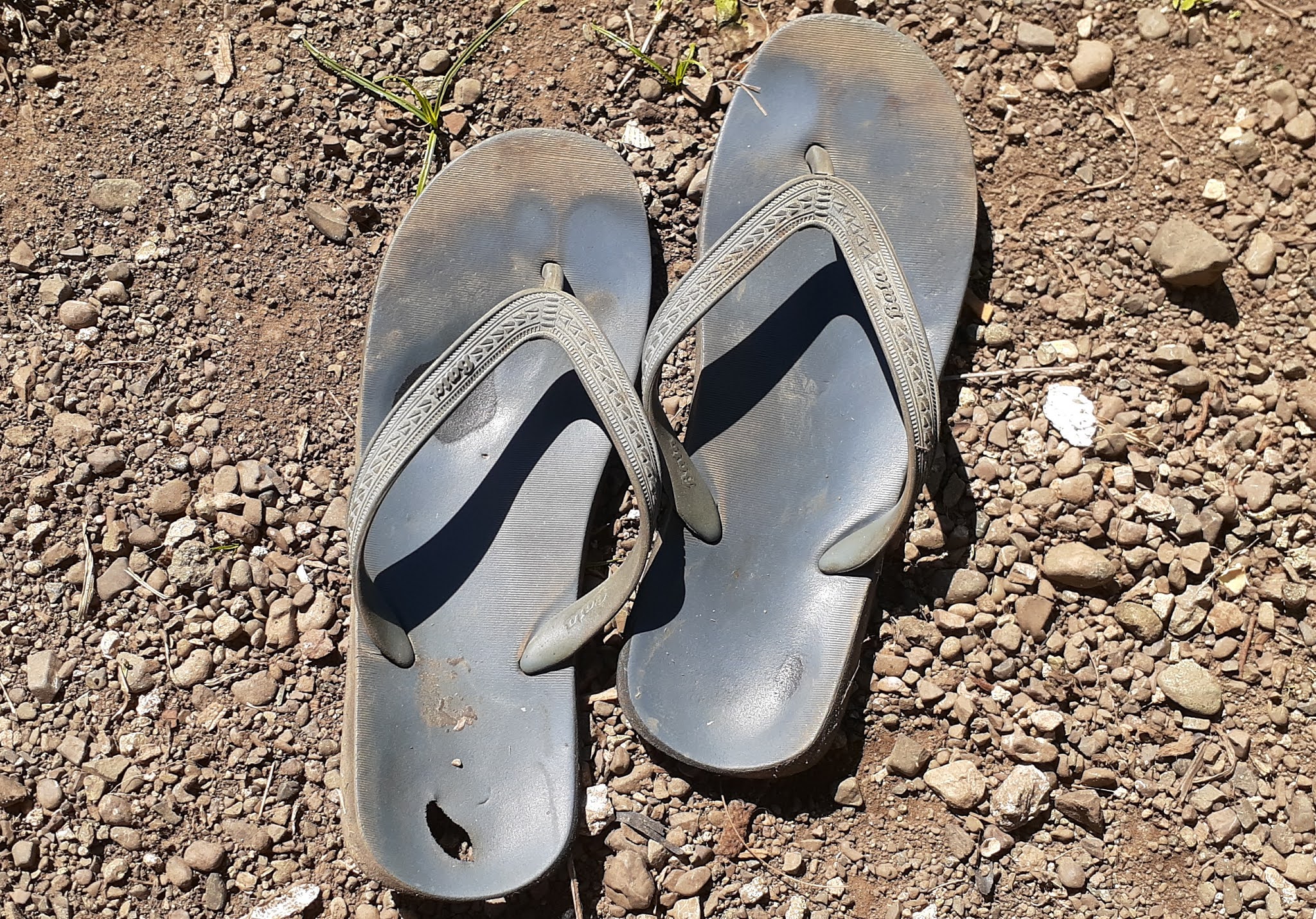
One of the best things about living in the village is the fresh earth food - kaukau, cassava, banana and taro. It feels good when you eat from the earth you have cleared and tilled.
December 16, 2021
Village Living
December 09, 2021
Sago Beating
This week is sago beating time! You have to do this job of beating sago so you can have food.
October 07, 2021
The white house on Pamachau
A few days ago when travelling on the south coast of Manus, we came past Pamachau. It is a very small island just a few hundered meters or so off the mainland of Manus. The space between this island and the mainland, where Waratalai and Lawes are, creates a narrow waterway where boats travel through when the high seas are rough. Many people who travel on the south coast come past this group of four or five houses which are literally on stilts due to rising sea waters.
The fascinating thing about this picture is that I first saw this white house on a person's laptop at DWU in Madang so many years ago. He had this picture of the house on his laptop's desktop. I had asked this person why he had this as his desktop picture and he would proudly tell of this spot here. Of course it was my late colleague Mr. Kichawen Chakumai and this was his house. He was one of PNG's senior and qualified health administrators serving in the early government health's 'one system' just after PNG's Independence, then the two health systems in the 1995 Organic Law on Provincial & Local Level Government era and then the new 'wan system tasol' in the 2007 Provincial Health Authority era (health managers know what Im talking about...). He was also a Health Extension Officer who became an academic at DWU and taught many HEOs and Health Administrators/Managers that came through DWU.
My eyes watered as i stood on the boat in the mid morning sun and saw this white house. The last time I saw him alive was when I helped carry him from his house to the car to go to Modilon Hospital some three years ago. I wished that when i finally travelled this way, I would have stopped the boat to come meet you and hug you under your white house. Sometimes we miss people not because they are gone and are no more in our presence but we miss them more because of the 'what ifs' and the 'what could have beens'.
I salute you and I miss you too!
The white house on Pamachau
A few days ago when travelling on the south coast of Manus, we came past Pamachau. It is a very small island just a few hundered meters or so off the mainland of Manus. The space between this island and the mainland, where Waratalai and Lawes are, creates a narrow waterway where boats travel through when the high seas are rough. Many people who travel on the south coast come past this group of four or five houses which are literally on stilts due to rising sea waters.
The fascinating thing about this picture is that I first saw this white house on a person's laptop at DWU in Madang so many years ago. He had this picture of the house on his laptop's desktop. I had asked this person why he had this as his desktop picture and he would proudly tell of this spot here. Of course it was my late colleague Mr. Kichawen Chakumai and this was his house. He was one of PNG's senior and qualified health administrators serving in the early government health's 'one system' just after PNG's Independence, then the two health systems in the 1995 Organic Law on Provincial & Local Level Government era and then the new 'wan system tasol' in the 2007 Provincial Health Authority era (health managers know what Im talking about...). He was also a Health Extension Officer who became an academic at DWU and taught many HEOs and Health Administrators/Managers that came through DWU.
My eyes watered as i stood on the boat in the mid morning sun and saw this white house. The last time I saw him alive was when I helped carry him from his house to the car to go to Modilon Hospital some three years ago. I wished that when i finally travelled this way, I would have stopped the boat to come meet you and hug you under your white house. Sometimes we miss people not because they are gone and are no more in our presence but we miss them more because of the 'what ifs' and the 'what could have beens'.
I salute you and I miss you too!
August 17, 2020
The PNG PM at 49 in 1985
Today, as I was going through some old newspapers, I came across the picture of one of Papua New Guinea's great leaders - Mr. Micheal Somare. He was the first PNG prime minister and one of the founding leaders of PNG's independence journey.
What took be aback from this picture was of how young he looked when he turned 49.
The picture appeared on the front page of the Post Courier on Tuesday, April 9th, 1985.
July 15, 2020
A loss for Manus
Ah sore...Dr. Gabriel Kulwaum...a loss for Manus! He did his PhD at the University of Queensland with his thesis titled 'Problems of devolution in Papua New Guinea education' in 1995. I remember when I was in high school at ECOM, he was a dedicated school Board Chairman.
One day he came to school and found that the students in one class were
making a lot of noise and he went in to investigate. He found that the
teacher had just left to find buai/smoke at the nearly village. Dr. Kulwaum quickly took his vehicle, went to the village and literally chased the teacher back to the classroom.
When students faced disciplinary actions during weekends he would
interrupt the school assembly on Monday morning and lecture the whole
student body: 'hamaspla haus yu buildim pinis na yu laik marit? Hamaspla
kanu yu sapim pinis na yu laik wokim family? Hamas spia botol yu
stretim pinis na yu laik pait? Hamaspla saman blo kanu yu pasim pinis na
yu tok yu man?'
I salute you for the fact that you impacted the lives of Manusians for so long in so many areas of their social and cultural wellbeing. My sincere condolences to his family.
July 10, 2020
Oh sumatin laif....
June 27, 2020
Domestic Violence in PNG
I believe domestic violence is a systematic problem nationwide and therefore needs a systematic approach towards solving or reducing the problem and this needs to start at the top - political leaders. Political leaders as a group, wield great power including the political will to change something in their favour. If we have the political will to win, create and bankroll the South Pacific Games and the APEC meetings, then why cant we for something that matters to our loved ones? Our hauslain? This 100% male parliament is not even close to hearing the cries of women. We need more women political leaders who, as a group, can change the momentum on the fight against domestic violence. This cannot happen in one go but over a number of years.
Come on women, 2022 is the year for change. Stand up, be counted and vote women into parliament! Imagine if 50% of parliament were women! Maski long votim ol man bikos nogat senis kamap na ol meri dai yet. Imagine the countless women who are in rural areas of PNG who face life like what this young lady went through everyday. We need a systematic change where relevant government agencies are adequately funded, legal systems and protocols for perpetrators are fasttracked, safe houses become the norm, hotlines are toll free, training for law enforcement, etc.
This fight needs political will to kickstart it. We have signed petitions, international conventions, ran campaigns etc. Inap! Sanapim wanpla meri lo komuniti blo yu, votim em lo 2022 na em bai go na rausim ol tambaran lo displa haus yah! Na yupla ol meri, inap lo votim ol man!! Displa pasin we igat 20 candidate na wanpla meri, maski votim ol man! Even if you dont like her, just block vote na yumi salim displa meri go lo Waigani! We need more firebrand Josephine Abaijahs and straight-shooting Carol Kidus! Come on, let us vote for change in 2022!
June 20, 2020
A wedding!
June 02, 2020
Coca Cola names on 330mls cans
The person who came up with this idea is a genius! Why I say this because the intended (if it was intended) effect is that when people buy these 330 mls cans of coke here in PNG, they actually share the can they bought or are drinking on social media, particularly Facebook. I am also on Facebook so I can see family and friends posting their cans of coke when they have found their names on the can. The recent one I saw yesterday was about the name of the place: Madang! I guess its something new, interesting and unique and the cans cost K2.00 and is often available throughout PNG. Once the cans on social media, it has a ripple effect as other people too want to share their names as well. This 'share a coke with' campaign is something people can relate to and of course identify with and so the social media posts continue to grow.
Once Coca Cola begins to put the original Papua New Guinea names on the cans of coke, this will reach another level altogether. Currently we are only seeing the common English names like Eddie and Latifa as shown on the two cans on my table. If Coca Cola PNG chooses to increase the names to include local or indigenous names such as Kisakiu or Kanawi or Kusunan or Poilep (a sample of names from the Titan language areas in Manus province), then it will be something else. I guess once we reach the names that are indigenous names that come from our villages or family members who bestow these names on us, then I imagine two things will happen:
1. Papua New Guineans will love coca cola more and cherish the idea that a huge company could care enough for that person and therefore print their names. They will drink the sweet liquid and then keep the can as a souvenir. Of course social media photos will grow as more unique names will appear on the cans. It is a special feeling when your unique name is on a can that someone else in the country has in their possession. It makes someone feel unique and special when people see your indigenous name on the can.
2. People will begin to question the use of indigenous names on the cans. I imagine some people might even begin to question the use of original names by a multi-coporation company and if they can actually do this. This is because we haven't seen Coca Cola PNG asking for people's names to be written on the cans like what is being done in Australia. What about issues of copyright? Will Papua New Guineans feel that such a huge company is using their unique names to sell for a profit?
Maybe I am making a mountain out of a mole hill. Maybe. We will see how this progresses in the coming weeks!
See yous!
April 29, 2020
Creating the Lesson Activity on Moodle
While there are various tools available to teachers, I found solace in the use of an activity tool that is found on Moodle. It is called the Lesson activity. I first did not know how to use this Moodle activity.
I had watched a video developed by fellow academic Mr. Bernard Yegiora which he shared on his youtube channel. Check out his blog here.
After viewing the video, I began practicing the outline of the lesson activity on Moodle. Eventually, I began to develop lessons for my final year students. One of the earliest lessons I learnt through the use of this Lesson activity is the importance of Lesson Planning. Lesson plans are a key aspect of a teaching strategy. The plan has a topic, learning objectives, list of materials, specific timeframes for each section, subtopics, review activities and exercises. I consider doing the lesson plan as much more of a difficult thing to do than developing the actual Lesson Activity on Moodle. So much time is spent on creating content for your students, placing yourself in their shoes, thinking about baby steps they can do in your lesson before moving onto the much complex areas of your topic. At the end when the lesson plan is done, you get excited as you now begin to transfer what is on the lesson plan onto the Lesson Activity on Moodle.
This image below shows the Lesson activity being implemented. As you can see, the lesson has subtopics with a menu and each topic is displayed in the centre.
Students have go read and go through each page. You have to click a link to go to the next page. They do that until they reach the last page and the lesson ends. Once a student reaches the end of the lesson, you get a notification of that student's completion.
I found that after developing the lesson, I could post it on Moodle and let the students go through the lesson pages at their own time. Thus I found that if you designed the lesson properly, you could develop it as a self paced activity for the student. This means that students can do it at their own time and pace during the week. You could also assess students through the lesson activity too if you wanted.
One of the better characteristics of the Moodle lesson is that one could develop review questions after each subtopic. For example you could develop Multiple Choice Questions or True/False questions as well. This enables the students to answer the question, get back the answers and continue through the lesson.
After developing some of the lessons during the lockdown period, I decided that I could help other academics learn about this activity as well.
I ran two sessions for staff members from my faculty (Faculty of Medicine and Health Sciences) and both sessions took roughly around two hours.
It was hectic and draining after each session but I got through it and was blessed to pass on the little knowledge I had to others. I guess this is part of fulfilling the Divine Word University theme for this year 2020: 'It is in giving to we receive'.
Someone asked me about why I was so intent on running the sessions for my colleagues as they had the internet to 'self learn'. I said that my belief is that by sharing, I help my fellow colleagues improve the way they teach. In this way, the academics, as a group, progress and move forward. For example, if I was only one person with a skill like this and didn't share, it helps no-one, because it creates a burden for myself as no one else will understand how to improve or find better ways for that particular skill I have. That is how I feel about sharing knowledge like this. Let me explain this in another way. If you are a fisherman from a fishing village and you develop a new technique on how to catch fish better, you have to share this new knowledge with other fisherman. You may keep your new technique a secret and catch more fish than everyone but soon or later when you get into trouble or get stuck with your new fishing method, nobody will know how to help you because you are the only one who knows how to help yourself get out...hahahahaha!
Anyway, if you ever get to use Moodle as a learning management system in your organisation or school, try this activity as it will help you greatly. One thing that I have seen is that though it is really hard work to develop the lesson plan for your Moodle lesson activity, in the long run it makes you, as an academic, become efficient with time so you can do other things like research, administrative tasks and even have time for family too.
Before I get out of here, I's like to say that, an event has forced us to change how we have been doing things. We must embrace the change, find the good in it, adapt to the changing times and help others climb up as well.
Em tasol!